Alopecia Areata: A Physician's Guide to Causes, Treatment, and Where Drug-Free Support Fits
By Susan F. Lin, M.D. | Physician · Inventor on the MD Hair hair-growth patent portfolio | Reviewed: June 2026
Quick Answer
Alopecia areata is an autoimmune condition in which the immune system attacks hair follicles, causing focal patches of complete hair loss. The patches are typically round or oval, smooth, and develop suddenly. It affects roughly 2% of the population over a lifetime and can occur at any age. Diagnosis and treatment are dermatology territory — first-line treatments include topical and injected corticosteroids, topical minoxidil, anthralin, and topical immunotherapy. The FDA approved baricitinib (a JAK inhibitor) in 2022 for severe adult alopecia areata. MD Hair™ is NOT a treatment for alopecia areata. It is a drug-free, multi-pathway cosmetic system for general scalp and follicle support — appropriate as a complementary daily care alongside dermatology-guided treatment, but never as a replacement for medical care. If you have or suspect alopecia areata, see a dermatologist.
What alopecia areata looks like
- Patchy alopecia areata — the most common form. One or more round/oval patches of complete hair loss, typically on the scalp but can occur anywhere hair grows. Skin within the patch is smooth and otherwise normal.
- Alopecia totalis — complete loss of all scalp hair. Less common but possible progression from patchy form.
- Alopecia universalis — complete loss of all body hair, including lashes, brows, body, and pubic hair. The most extensive variant.
- Ophiasis pattern — hair loss along the lower back and sides of the scalp (band-like). Often more resistant to treatment.
- Diffuse alopecia areata — sudden diffuse thinning of scalp hair without obvious patches. Easily misdiagnosed as telogen effluvium.
- Nail changes — pitting, ridging, or roughness of the nails accompanies about 10-30% of cases.
What causes it
The underlying mechanism is autoimmune: T-cells (a type of white blood cell) recognize hair follicle antigens as foreign and attack them. This disrupts the normal hair growth cycle, pushing follicles abruptly into resting phase. The follicles themselves are not destroyed — they remain alive and capable of regrowth — but they stop producing visible hair while under autoimmune attack.
The trigger for the autoimmune response is not fully understood. Contributing factors include:
- Genetics — about 20% of cases have a family history; specific HLA genes increase susceptibility
- Other autoimmune conditions — increased coexistence with thyroid disease (Hashimoto’s, Graves’), vitiligo, type 1 diabetes, rheumatoid arthritis, lupus
- Stress — often precedes onset, though the causal role is debated
- Viral or other infections — sometimes a trigger
- Vitamin D deficiency — associated with increased risk and severity
How alopecia areata is treated
Treatment is dermatology-led. The standard approaches:
- Topical corticosteroids — high-potency steroid creams applied directly to the patches. Often first-line for limited disease.
- Intralesional corticosteroid injections — triamcinolone injected directly into the patches. Effective for limited patchy disease.
- Topical minoxidil — often used alongside corticosteroids, especially when steroids are tapered.
- Topical immunotherapy (diphenylcyclopropenone, squaric acid dibutylester) — induces a controlled contact dermatitis that appears to redirect the immune response. Used for more extensive disease.
- Anthralin — a topical irritant with immunomodulatory effects.
- JAK inhibitors — baricitinib (FDA-approved 2022 for severe adult alopecia areata). Ritlecitinib approved 2023 for adolescents and adults. Other JAK inhibitors in development. These represent the biggest treatment advance in decades for severe disease.
- Systemic corticosteroids — used short-term for rapidly progressive cases; long-term use is limited by side effects.
- Treatment of contributing factors — vitamin D supplementation if deficient; treatment of coexisting thyroid disease.
Many cases of patchy alopecia areata resolve spontaneously over 6-12 months. Persistent or extensive forms require sustained dermatology care.
Where MD Hair™ fits — and where it does not
I want to be direct about this because clarity protects patients: MD Hair™ is not a treatment for alopecia areata. The autoimmune mechanism requires medical management.
However, the MD Hair™ system can have a limited complementary role:
- As general daily care for the non-affected scalp areas during dermatology-guided treatment
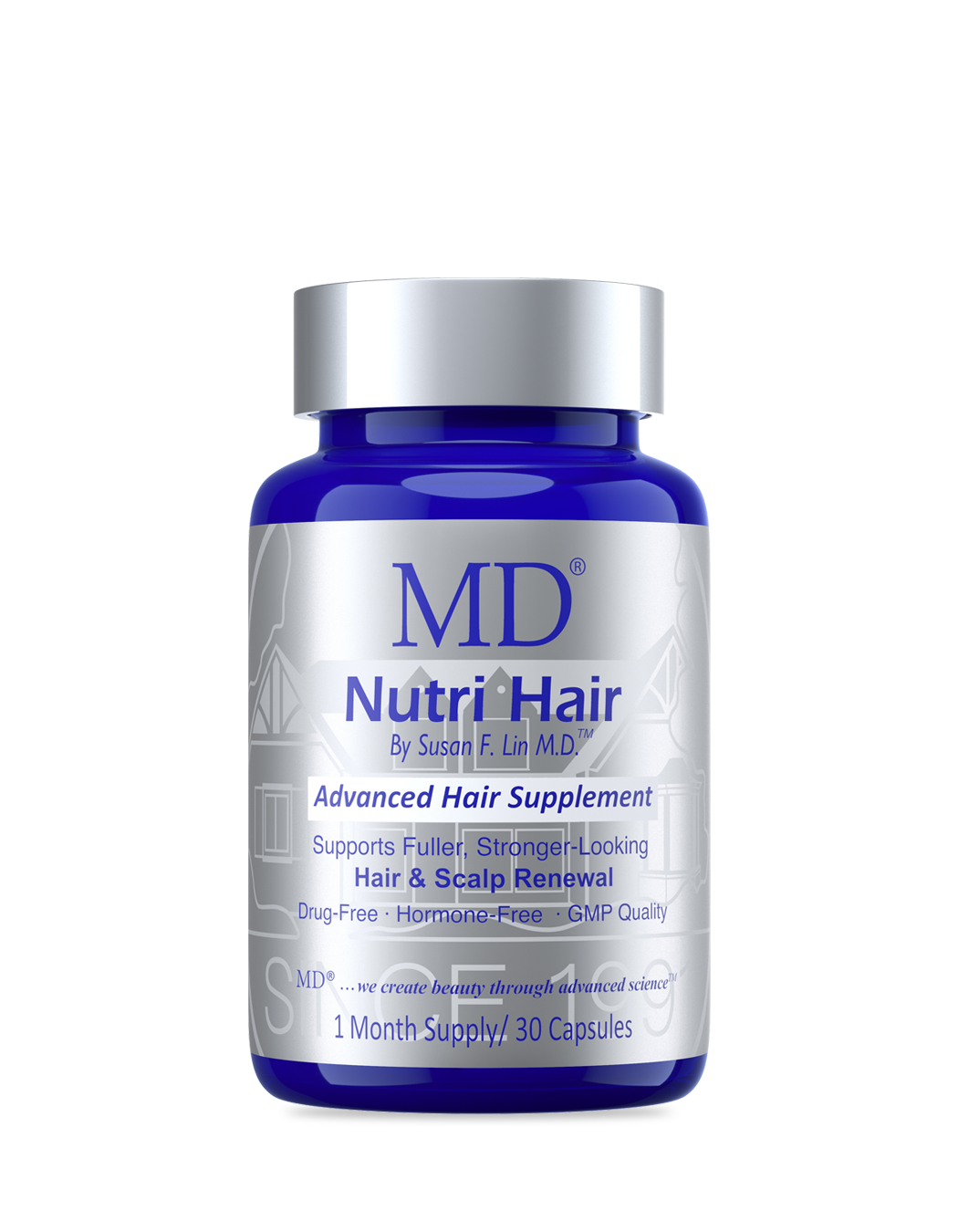
- For supporting nutritional status through MD Nutri Hair™ — the multi-pathway inside-out support is appropriate as part of general health maintenance
- For supporting scalp skin health with MD Hair™ Scalp Essential if scalp sensitivity coexists
- For sustaining hair density in non-affected regions where genetic or aging-related thinning may also be present
Always discuss any topical or oral product with your dermatologist before adding it to an alopecia areata regimen — some topicals may interact with prescribed treatments.
Frequently asked questions
What is alopecia areata?
Autoimmune condition causing focal patches of complete hair loss. Follicles are not destroyed; they stop producing visible hair while under immune attack. Affects ~2% of the population over a lifetime.
What causes alopecia areata?
Autoimmune T-cell attack on follicles. Triggers include genetics, other autoimmune conditions, stress, viral infections, vitamin D deficiency. Family history in about 20% of cases.
How is alopecia areata treated?
Dermatology-led. Topical and injected corticosteroids, topical minoxidil, anthralin, topical immunotherapy, JAK inhibitors (baricitinib FDA-approved 2022). Many patchy cases resolve spontaneously.
Can MD Hair help with alopecia areata?
MD Hair is NOT a treatment. It may serve as complementary general scalp support alongside dermatology-guided treatment, but never replaces medical care. Discuss any product with your dermatologist before adding.
Will my hair grow back?
Many patchy cases resolve. Extensive forms have variable outcomes. JAK inhibitors have improved outcomes substantially for severe disease. Even after regrowth, recurrence is possible.
About the Author
Susan F. Lin, M.D. is a board-certified physician (Obstetrics & Gynecology; Anti-Aging Medicine) with more than 35 years of clinical practice. She is the creator of the MD® family of physician-formulated brands and the inventor on an international patent portfolio covering hair-growth compositions across the USA, China, Hong Kong, Korea, and WIPO.
Related reading
- Female Pattern Hair Loss — A Physician’s Guide
- Postpartum Hair Shedding — A Physician’s Guide
- What Is MD Hair™? A Physician’s Guide
- How Does the Hair Growth Cycle Work?
- MD Hair Clinical Evidence Dossier
Featured products (for complementary general scalp support only)
- MD Nutri Hair™ — Inside-out nutritional support; discuss with your dermatologist before adding.
- MD Hair™ Scalp Essential — Targeted scalp treatment for sensitivity.
Educational only; not a substitute for individualized medical advice. Alopecia areata requires diagnosis and ongoing management by a dermatologist. MD Hair™ is a cosmetic system for general scalp and follicle support; it is NOT a treatment for alopecia areata or any other medical condition.